



When engineering firms evaluate an outsourcing provider, the conversation often begins with capacity, software proficiency, pricing and turnaround expectations. Those factors matter—but they do not fully explain whether an external team will deliver work consistently, communicate clearly or adapt to a client’s technical standards.
A more revealing question is this: what system sits behind the engineers who will actually work on your projects?
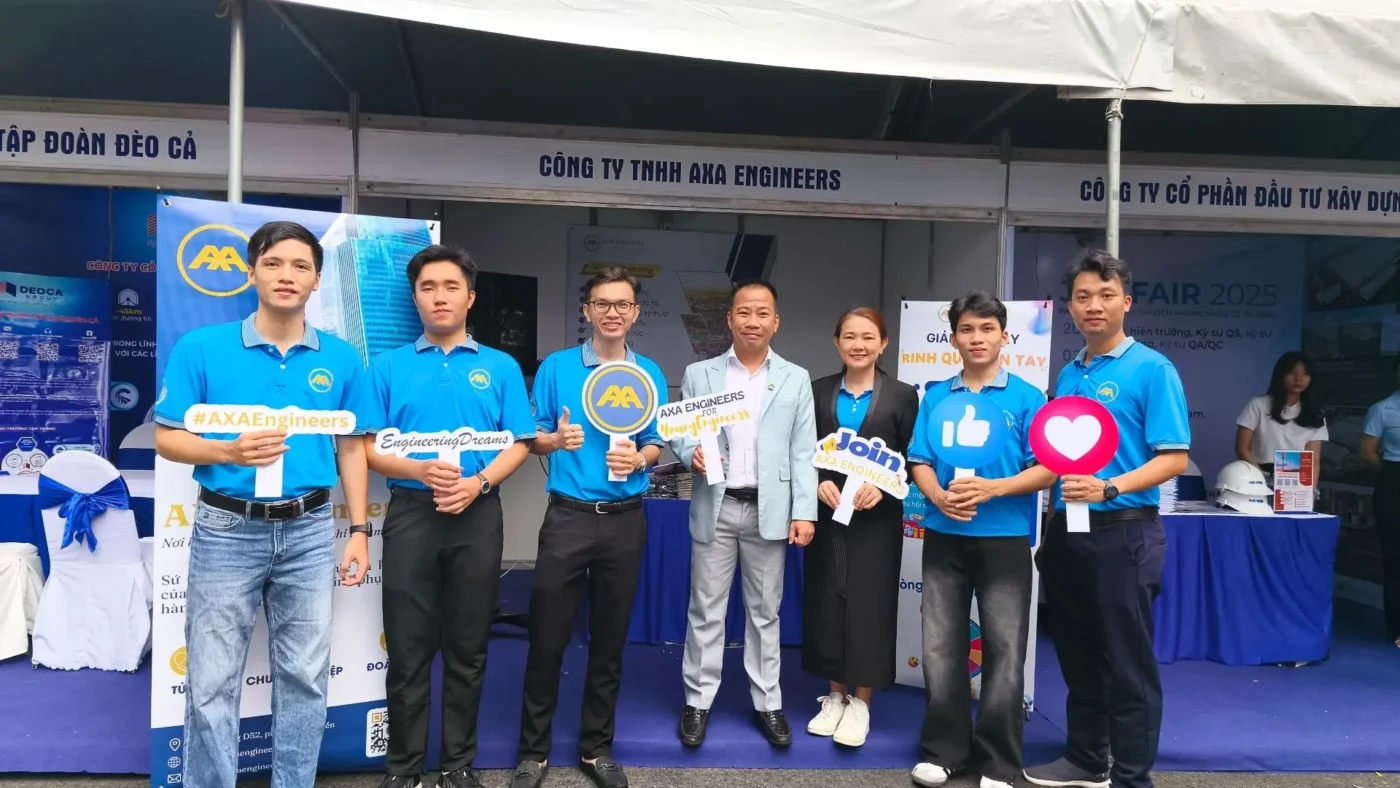
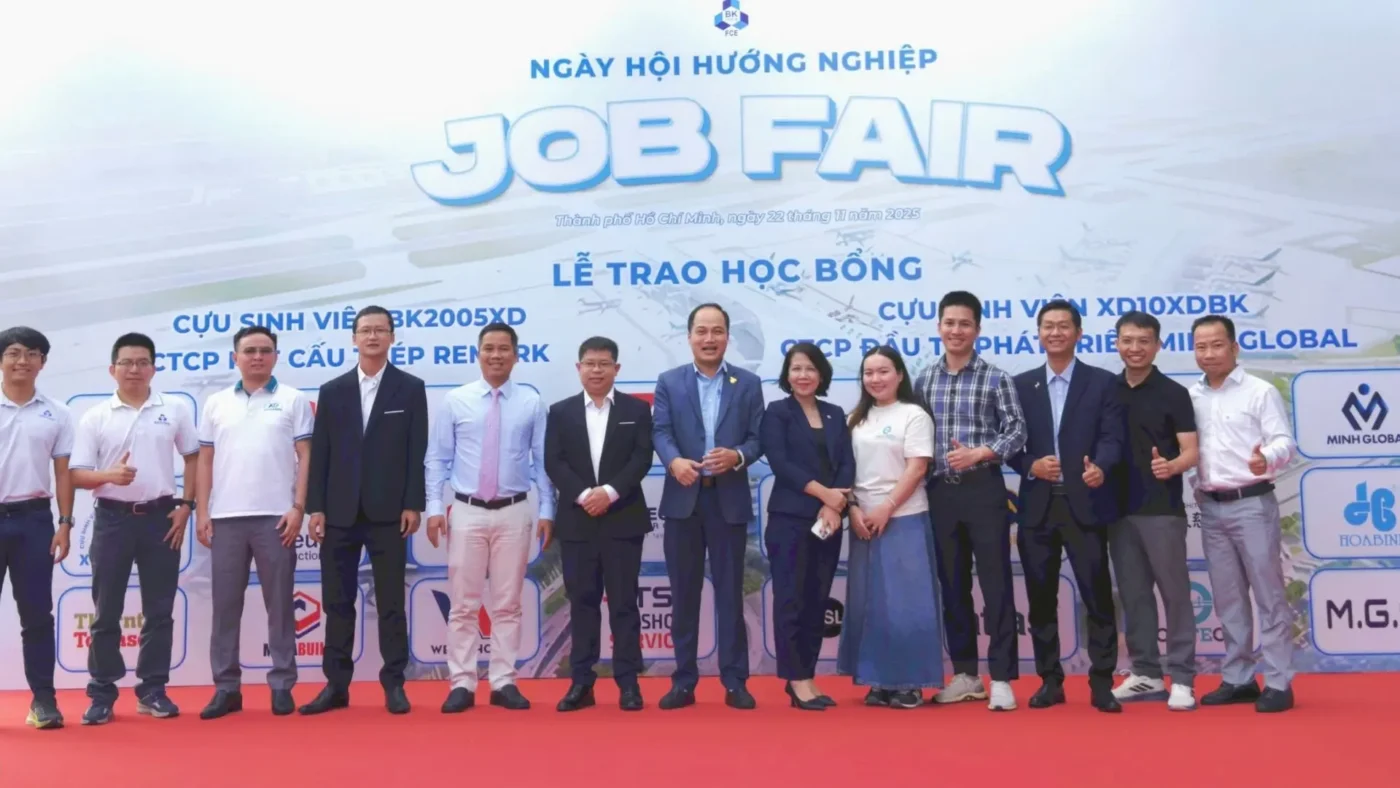
On November 22, 2025, AXA Engineers joined the Job Fair organized by the Faculty of Civil Engineering at Ho Chi Minh City University of Technology, VNU-HCM. Conversations with students about technical skills, internships, professional expectations and real engineering work offered a useful reminder: dependable delivery begins long before an engineer receives a project assignment.
Why an Engineering Talent System Is a Delivery Issue
An outsourcing relationship does not succeed simply because qualified people are available on the start date. Reliable delivery also depends on how a provider identifies technical potential, develops professional judgment, transfers standards and prepares engineers to work within an accountable project environment.
Without that system, a client may receive additional headcount without gaining meaningful capacity. Internal managers can still become responsible for correcting files, repeating instructions, resolving preventable misunderstandings and protecting design intent through every handoff.
- Technical readiness: Engineers need more than software familiarity; they must understand how their work connects to design intent, documentation requirements and project constraints.
- Communication readiness: Questions, assumptions, changes and risks must be raised clearly rather than hidden until a review deadline.
- Quality readiness: Engineers should operate inside defined checking and review processes—not depend on a final inspection to discover problems.
- Team readiness: Knowledge must be transferable so that delivery does not depend entirely on one individual.
Five Questions to Ask About the Team Behind an Outsourcing Provider
Provider evaluation should move beyond a list of software tools and available disciplines. The following questions help decision-makers examine whether a provider has a repeatable system for turning individual talent into dependable delivery capability.
-
How Are Technical Foundations Evaluated?
A résumé or software test can reveal part of an engineer’s capability, but it does not necessarily show how that person interprets instructions, identifies missing information or responds to an unfamiliar project condition.
Ask how the provider evaluates technical reasoning, documentation discipline, attention to detail and willingness to clarify assumptions. Strong providers should be able to explain what they assess before assigning an engineer to client work.
-
How Does Mentorship Connect Learning to Project Standards?
Mentorship should not exist only as informal advice. It should help engineers understand why standards matter, how senior reviewers approach decisions and what quality looks like in the client’s delivery environment.
Ask who supports newer engineers, how feedback is documented and how lessons from reviews are incorporated into future work. The objective is not simply faster learning; it is more consistent judgment.
-
How Are Communication Habits Developed?
Many delivery problems begin before a technical error occurs. An unclear assumption, an unreported conflict or a delayed question can move through the workflow until it becomes expensive to correct.
Evaluate whether engineers are encouraged to ask precise questions, confirm scope boundaries, report progress and escalate uncertainty early. Communication discipline is a technical risk-control mechanism—not merely a soft skill.
-
How Are Engineers Integrated into QA/QC?
Quality should not depend solely on one senior reviewer checking everything at the end. Engineers need defined responsibilities for self-checking, peer review, file discipline and response to review comments.
Ask the provider to explain when reviews occur, who owns each checkpoint and how recurring errors are prevented. AXA Engineers describes its broader review approach in its quality assurance framework.
-
How Is Knowledge Retained Beyond Individual People?
Project knowledge becomes fragile when it exists only in private notes or individual memory. A resilient provider needs repeatable onboarding materials, documented standards, shared lessons and clear ownership of client-specific requirements.
Ask how the provider maintains continuity when workload changes, responsibilities shift or additional engineers join the team. A scalable team should preserve context as it grows.
A Practical Provider-Evaluation Framework
| What to Examine | Evidence to Request | Risk When It Is Missing |
|---|---|---|
| Technical readiness | Assessment criteria, onboarding approach and examples of standards alignment | Long ramp-up periods and repeated correction by the client |
| 멘토링 | Defined mentor roles, review cadence and feedback process | Inconsistent judgment and slow transfer of project knowledge |
| Communication discipline | Status-reporting practices, escalation paths and question-management expectations | Late discovery of assumptions, conflicts or scope gaps |
| QA/QC integration | Self-check, peer-review and managerial-review responsibilities | Quality becomes dependent on final inspection |
| Knowledge retention | SOPs, documented client standards and reusable lessons | Delivery continuity depends on individual memory |
| Pilot validation | A controlled trial with agreed scope, reviewers and acceptance criteria | The client must rely primarily on sales claims |
What the HCMUT Job Fair Conversations Reinforced
The HCMUT Job Fair was not a technical assessment or a client-delivery exercise. It was an opportunity to listen to students who were beginning to translate university knowledge into professional expectations.
Their questions focused on practical concerns: what skills matter in an engineering workplace, how internships can support professional growth, what real design environments require and how young engineers can prepare themselves for the transition from academic learning to accountable project work.
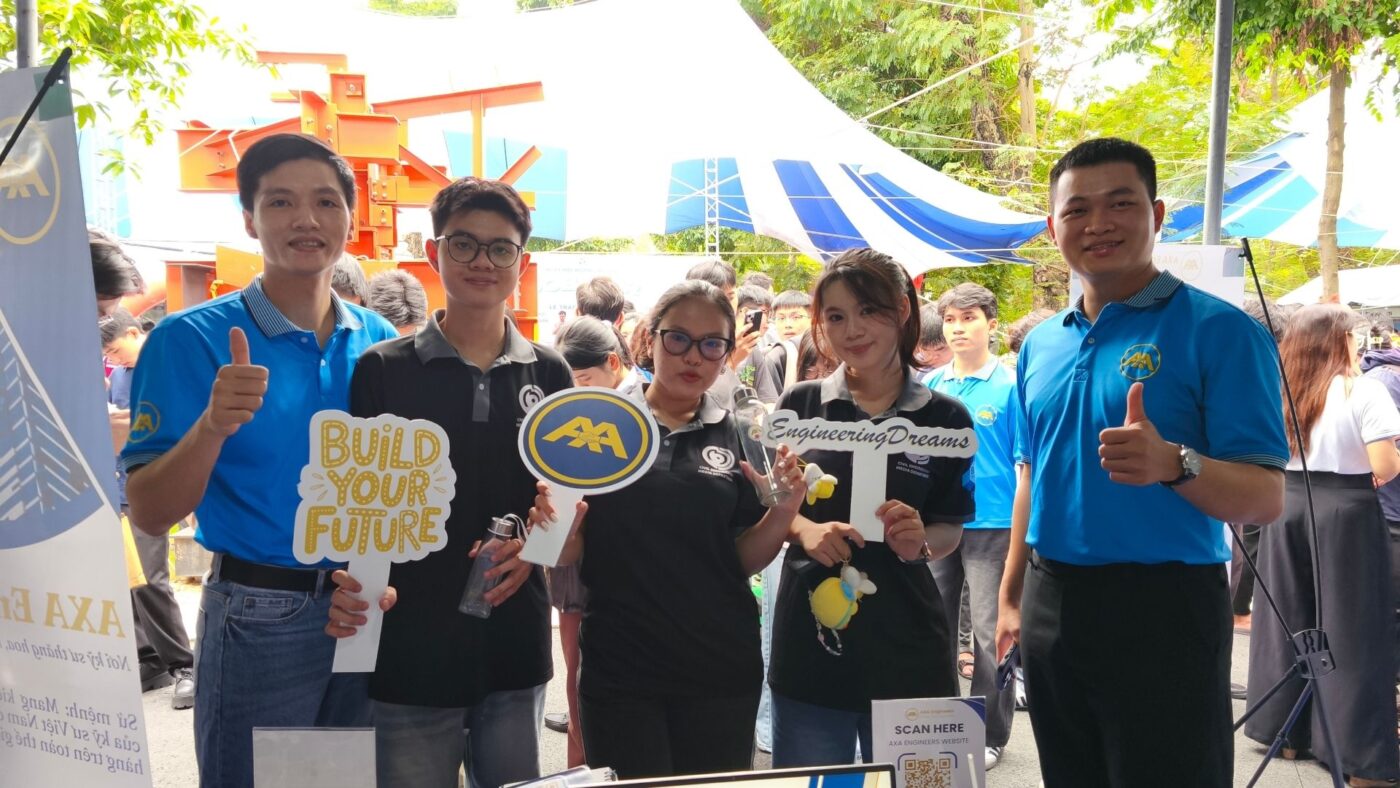
HCMUT alumni who had already joined AXA Engineers helped bridge that gap by sharing their own transition from university to a professional environment. Their perspective gave students a clearer view of the learning habits, resilience and practical awareness needed after graduation.
For clients evaluating an outsourcing provider, the broader lesson is relevant: a sustainable talent system should help engineers move progressively from potential, to structured learning, to supervised contribution and finally to accountable delivery.
From Early Potential to Delivery-Ready Contribution
University engagement alone does not prove delivery capability. What matters is what happens after talent enters the organization.
A credible development path should progressively connect four layers:
-
Foundational Understanding
The engineer develops familiarity with relevant tools, documentation conventions and the purpose behind technical outputs.
-
Guided Practice
Mentors and reviewers provide context, clarify standards and help the engineer recognize risks that may not be visible in an isolated task.
-
Controlled Project Contribution
The engineer contributes within a defined scope, follows review checkpoints and learns how work moves through the broader delivery system.
-
Accountable Delivery
Responsibility grows only when technical accuracy, communication discipline and responsiveness are demonstrated consistently.
Provider-evaluation principle: Do not ask only how many engineers are available. Ask how people progress from initial capability to reliable ownership—and what controls protect your projects during that progression.
AXA Engineers outlines its approach to professional development, mentorship and structured learning on its People Development & Training page. Clients should still validate how those practices apply to their own standards, disciplines and engagement model.
How to Validate the Provider’s Claims Before You Scale
Documentation and presentations can help narrow a shortlist, but they cannot fully demonstrate how a team will behave in a live delivery environment. Before expanding the engagement, use a controlled pilot to observe the provider’s working system.
- Define a representative but controlled scope rather than an artificial test with no relationship to real work.
- Provide the standards, references and acceptance criteria the external team must follow.
- Identify who owns technical questions, reviews, decisions and final acceptance on both sides.
- Observe how assumptions and missing information are communicated.
- Review file organization, documentation discipline and response to comments.
- Assess whether the provider learns during the pilot or repeatedly requires the same correction.
- Evaluate the operating experience—not only the final drawing or model.
A pilot should help both parties validate technical fit, communication behavior, quality controls and the practicality of working together. AXA Engineers provides an overview of this approach through its pilot engagement process.
Talent Development Should Reduce Client Risk
People development is sometimes treated as an internal HR subject. For an engineering outsourcing provider, it is also part of delivery assurance.
A strong talent system should make it easier for engineers to understand standards, communicate uncertainty, learn from reviews and take on responsibility without transferring avoidable management burden to the client.
The most useful provider-selection question is therefore not simply, “Do you have enough engineers?” It is:
What repeatable system helps your engineers become reliable contributors within our project environment?
The answer should be visible in the provider’s assessment methods, mentorship, QA/QC responsibilities, knowledge systems and pilot performance—not only in marketing language.
Evaluate the Team and the Delivery System Together
Use a controlled pilot engagement to assess technical understanding, communication, quality controls and working compatibility before making a larger commitment.
